Writing Skillet #2 - YUM, Science Fantasy
- ellynmfranklin
- Mar 7, 2021
- 6 min read

Good morning, everyone, and welcome to Writing Skillet. Thank you for joining me for breakfast today. I’m recording this the morning after #Pitmad, and by this time, I think I’m four pitch events in (six if you count #SFFpit), I know that pitching hangovers are real. I am FEELING it. I actually just deleted the Twitter app from my phone because I just feel sick from using it so much. My husband I have been monitoring our “Digital Wellbeing” tabs on our phones and I didn’t tell him how much time I spent on my Twitter yesterday... I'm ashamed!
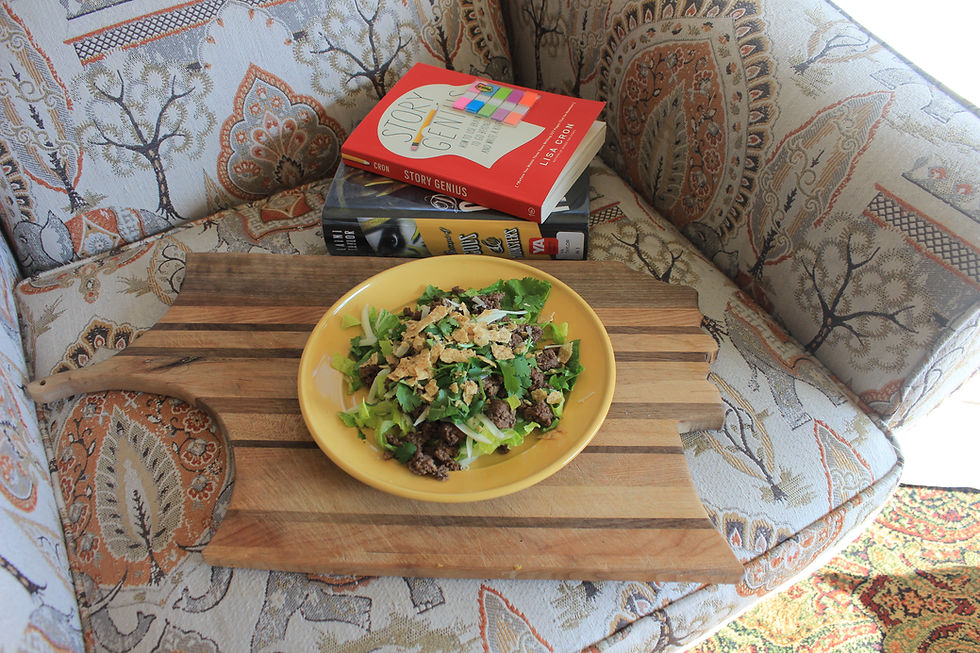
What really sounds like a cure for this terrible #Pitmad hangover is … sausage, fried egg, sharp cheddar and avocado on homemade sourdough toast. I’ll be posting a picture of that on the blog transcript and my Twitter for this episode if you want to see some true YUM.
So today we’re talking about relationship arcs, specifically the one in a fantastic book I just read called “MIDDLEGAME” by Seanan McGuire, which came out in 2019. This is what I would call a true science fantasy – you’ve got a bit of magical stuff going on, which is explainable via science but some of it is a little much for science. You have a classic villain, a universe in need of saving... genetically engineered humans, chess, this book has it all. Special thanks to my dad, who was the one to suggest this for my TBR.
Here's the blurb from the inside cover.
“Meet Roger. Skilled with words, languages come easily to him. He instinctively understands how the world works through the power of story. Meet Dodger, his twin. Numbers are her world, her obsession, her everything. All she understands, she does so through the power of math. Roger and Dodger aren’t exactly human, though they don’t realize it. They aren’t exactly gods, either. Not entirely. Not yet. Meet Reed, skilled in the alchemical arts like his progenitor before him. Reed created Dodger and her brother. He’s not their father. Not quite. But he has a plan: to raise the twins to the highest power, to ascend with them and claim their authority as his own. Godhood is attainable. Pray it isn’t attained.”
Honestly... I feel like this blurb does not do the book justice, because my first reaction was, “Roger and Dodger? Seriously? Dad?” So, if that's your reaction right now, I get it. It sounds like a cheesy, wondertwins type story, but, believe me, it's not. I read it because I trust my dad’s recommendation and he knows way more about the fantasy genre than me. And also, I had never read Seanan McGuire before, and she is a big name in the industry. So me in my ignorance didn't have what's probably the typical reaction to the name Seanan McGuire?
Just trust me , this book is fantastic, and probably the most fantastic thing about it is the relationship arc between the twins, Roger and Dodger. The twins grew up in different homes in different parts of the country, but they first met each other in their minds, through something called “quantum entanglement."
I mapped out the relationship arc in this book and gave my own labels to it. We're going to call it "ERRF." It follows this pattern:
- Exploration is where a relationship arc begins, when two characters meet and get to know each other, see how the other makes them feel, and work toward their first conflict.
- Rift 1 is a conflict or wedge that drives the two characters apart. - Reconciliation 1 is where the two characters come together again and solve their differences, though there may still be problems in their relationship. - Fusion is the moment, ideally after a second conflict, when the characters join forces to accomplish what the book needs them to accomplish.
The number of rifts and reconciliations will vary from storyline to storyline.
Stay with me. We’re going to dive into this. If you are planning to read the book, you could wait to listen to this episode, although I’m not going to give anything substantial away.
Here is the graphic I made to demonstrate ERRF as it plays out in Middlegame.

Exploration: The twins are just kids, each living with their adoptive families. They learn how to enter each other’s heads almost on accident, and it’s cool, as well as a bit creepy. They have fun with this and due to their age, they're more willing to accept something as weird as quantum entanglement without question. They help each other with their homework. It’s all good until they deviate from the alchemist Reed’s timeline.
Rift 1: That brings us Rift 1. An authority figure gaslights Roger into wondering if Dodger is truly real. She threatens to remove Roger from his parents to “get him help.” To protect his family, Roger chooses to shut Dodger out and he promises to never speak with her again.
Reconciliation 1: They meet in real life at a chess competition, and Roger has to deal with the bitterness he made Dodger feel and the grudge she holds against him. He reaches out and re-initiates their relationship, but she rejects him. He persists, and they re-form their relationship. Okay, but the best part about this, is they are friends again, but it’s not clean. I read so many books where one “I’m sorry” fixes everything. Don't we all know that real life doesn't work the same way? If someone does something hurtful to you it can take years and decades to rebuild that trust. We see that illustrated here. Dodger wants Roger back, because he is her best and only friend, but she is always hurt by his betrayal.
Rift 2: Roger and Dodger are growing up. Dodger, math nerd, has no friends but Roger and yet she sees him using his skill with words and language subconsciously to become quite popular. He has a life. She is alone and she feels she will always be alone. She makes a suicide attempt. Roger senses this through quantum entanglement and saves her. This time, she is the one who stops answering him. (It’s her turn to have a moment.)
Reconciliation 2: Five years have passed, and the two meet physically at grad school. From there, they rebuild their friendship. Again, the hurts from their past still exist, but from here, they’re ready to grow.
Rift 3: This time, the third rift doesn’t happen because they hurt each other. They find a groove, they’re having fun together, they’re growing, and because of that, something catastrophic happens in their environment. Other people are killed. Roger leaves Dodger. He knows that this is wrong, he never wants to mistakenly hurt others again.
Fusion: This time, they don’t reunite until 7.5 years later. Reality hits, and forces Roger to reach out again. This time, they are able to come together, realize their full potential, and do what they need to do to save the universe. And we get the impression from here that they don't shut each other out anymore.
This might seem repetitive, but the thing is, these characters are deep enough that it WORKS. There is so much to these characters and the complexity and uniqueness of their relationship, that you want to see them keep trying and failing until they’re eventually at a place where they can truly succeed. I think if their arc was any shorter, it would leave the reader feel less than satisfied.
So, I have a friendship arc in my novel and I tried to put it into this same formula. My characters are not as complex. So I made it through:
- Exploration - Rift 1 - Reconciliation
- Fusion
Here's a little graph I made of this, for a better visual. Obviously, I think this pattern can change a lot through different books and I'm kind of interested to apply it to to other books.
I would encourage you to map out a relationship in your own novel because the more you understand what you’re writing and trying to accomplish, the deeper and better written it will be. How can you make your different rifts and reconciliations unique and push the story forward in different ways?
That’s all for today, thanks for sticking with me through Middlegame, and we’ll see you next week for more breakfast from Writing Skillet! You can listen to the podcast version of this episode here.


Comments