Soup and Syntax (Writing Skillet ep. 1)
- ellynmfranklin
- Feb 28, 2021
- 4 min read
Updated: Mar 5, 2021

Writing podcasts give me life and I'm finally giving the podcast thing a try myself. Every Sunday, sit down with me and we'll talk breakfast, writing craft, and maybe even do an exercise or two. For those who prefer reading to listening, I plan to parallel each episode with a post.
First things first: let's have breakfast!
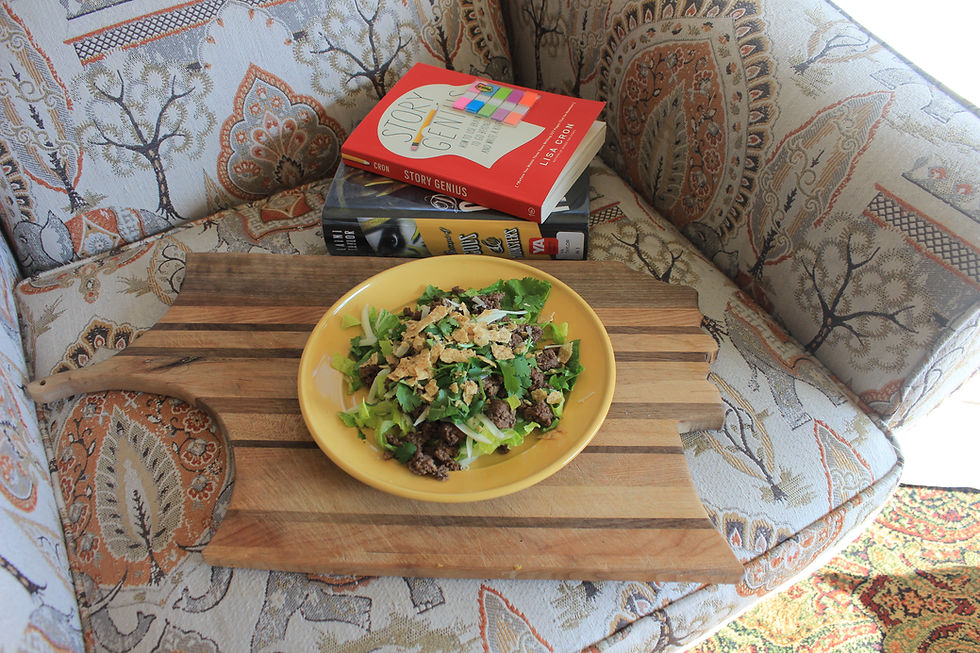
Today for breakfast I have some leftover soup and two slices of sourdough toast that I made this week. I know eating soup for breakfast is strange, but this soup is called, “glowing carrot ginger turmeric soup” and it smells exactly how it sounds. I swear it makes my house glow. It’s a great winter recipe and I like making a huge pot of it so I can eat it for a week or so. It pairs excellently with breakfast sausage and fried eggs, but today that just sounded too heavy. I also have coffee with collagen and cream in it, and water, because that’s important.
I would say that I don’t eat breakfast every day, but...I do. And I pretty much always have, even when I started work at 6 a.m. Much like Ron Swanson, I just love everything about breakfast and enjoy the chance to sit down for a minute before rushing to start my day.
Practicing Syntax:
Now that I’ve sat down for breakfast, let’s jump into today’s writing topic. I’m reading Ursula K. Le Guin’s “Steering the Craft” book, so you’ll probably be getting a few posts that relate to things I’ve learned from Ursula. I just read chapter three, which is about syntax – and it's embarrassing, but despite being a writer, I barely knew how to define that word.
Merriam Webster defines syntax as "the way in which linguistic elements are put together to form constituents, such as phrases or clauses."
Ursula gave an exercise that involved writing a paragraph of short sentences, all seven words at maximum, and then a paragraph following it that's essentially one long sentence. I’m not a stickler for following exercises exactly as they are written. I find that more magic happens when I let them take on their own life as I go. Going off Ursula's prompt, I wrote about a girl breaking into a house. The first paragraph where she is actually breaking in, I used my short sentences. In the second paragraph, the people in the house wake up and I used one long run-on sentence.
Version 1:
Fiona lifted the latch. She lifted it like an artist lifting a paintbrush. As if it weighed nothing at all. As if it was air. In the same breath, she stepped inside. Uncle was sleeping on the couch. Aunt was in the bedroom. Fiona could see the woman’s profile through the crack in the door. The manila folder was on the table. Fiona floated toward it.
“Fi…?” Uncle Peter woke, and rubbed his eyes – his sudden jerk to a sitting position sent reverberations through the condo and Aunt Letty stirred as well – first just a roll to the left, then a roll back to the right -and then her eyes sprang open like a trap and Fiona stood there between them, caught.
I actually really like how it turned out. As I thought about this prompt, I realized that if I'd written it without the parameters of the exercise, I would have switched my syntax so the long, flowing sentence came first and the short, jerky sentences came after. Like this:
Version 2:
Fiona lifted the latch like an artist lifting a paintbrush – as if it weighed nothing at all, as if it was air, and she floated inside on the same breath, scanning the room for the manila folder, which she saw on the table, between Uncle asleep on the couch and Aunt asleep in the bedroom, her profile barely visible through the open door.
Fiona floated toward the folder. “Fi…?” Uncle Peter rubbed his eyes. He jerked to a sitting position. His sudden motion sent reverberations through the condo. Aunt Letty stirred too. First, just a roll to the left. Then, a roll back to the right. Then, her eyes sprang open like a trap. Fiona stood there between them, caught.
I don’t think there is a right or wrong here, and I can't tell which is my favorite. I can definitely see how the syntax changes the way I picture the whole scene unfolding. In Version 1, the long sentence illustrates how everything happens at once and falls apart around Fiona. In Version 2, it's like she's watching her robbery go wrong in slow motion, and every movement from her uncle and aunt bring her closer to disaster.
To some of us who have been writing a long time, syntax may seem like pretty basic stuff, but I enjoyed this refresher on it and I feel like I haven't been using it to its full potential in my novel writing. Time to crack open that MS (again).
I'd encourage you guys to try this exercise, and I'd love to see what you come up with! If you've got any other resources on syntax, I'd enjoy seeing those as well.


Comments